Western society’s views on sex have undergone a major transgressive shift over the last few centuries. Some people believe that grouping sexual identities into increasingly narrow categories restricts a person’s freedom to express a truly fluid sexuality, and that each newly accepted sexual orientation demands both acceptance and adoption of increasingly specific criteria. Dissatisfaction with “traditional” labels is more than valid but doesn’t necessarily have to lead to creating new ones. No matter which side of the debate you fall on, these new sexual classifications are no less real or personal to those choosing to check those boxes. So, here are the latest terms and what they mean.
Asexual
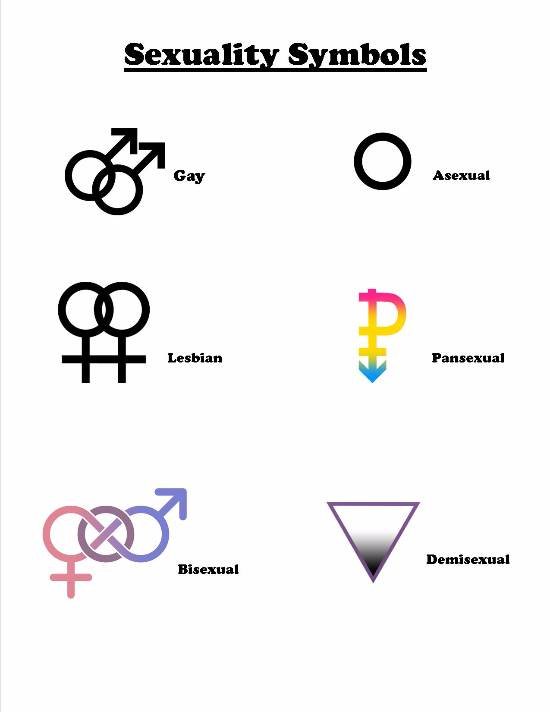
This orientation denotes a lack of any sexual attraction, regardless of gender. No matter what their reasons or lack of reasons are, asexuals are neither interested in nor desire any sexual activity. Nonetheless, they may or may not be in an asexual romantic relationship. Asexual is different from celibate- since the latter is about choosing to refrain from sex, despite desire still existing.
Demisexual
This term is entirely unrelated to gender however is still considered a sexuality identifier. Characterized by the need to develop a strong emotional connection before engaging in sex, demisexuals require a strong emotional bond before they feel capable of getting sexually involved with anyone.
Gynosexual
Don’t worry, this had nothing to do with styrups or pap smears. Gynosexuals are sexually and/or romantically attracted to anything associated with females, female parts, female identity, women, femininity. Obviously, this can be interpreted in any number of ways, and differs from person to person. Some people who identify this way may care more about gender, or specifically cisgender identity than others.
Skoliosexual

To be skoliosexual is to be attracted to anyone who isn’t cisgendered. Skoliosexuality refers to sexual attraction to people who identify as non-binary, and apparently does not generally describe an attraction to specific genitalia or birth assignments.
There are many more out there, if you get a little lost its okay to ask questions, as long as you keep an open mind when it comes to hearing the answer.