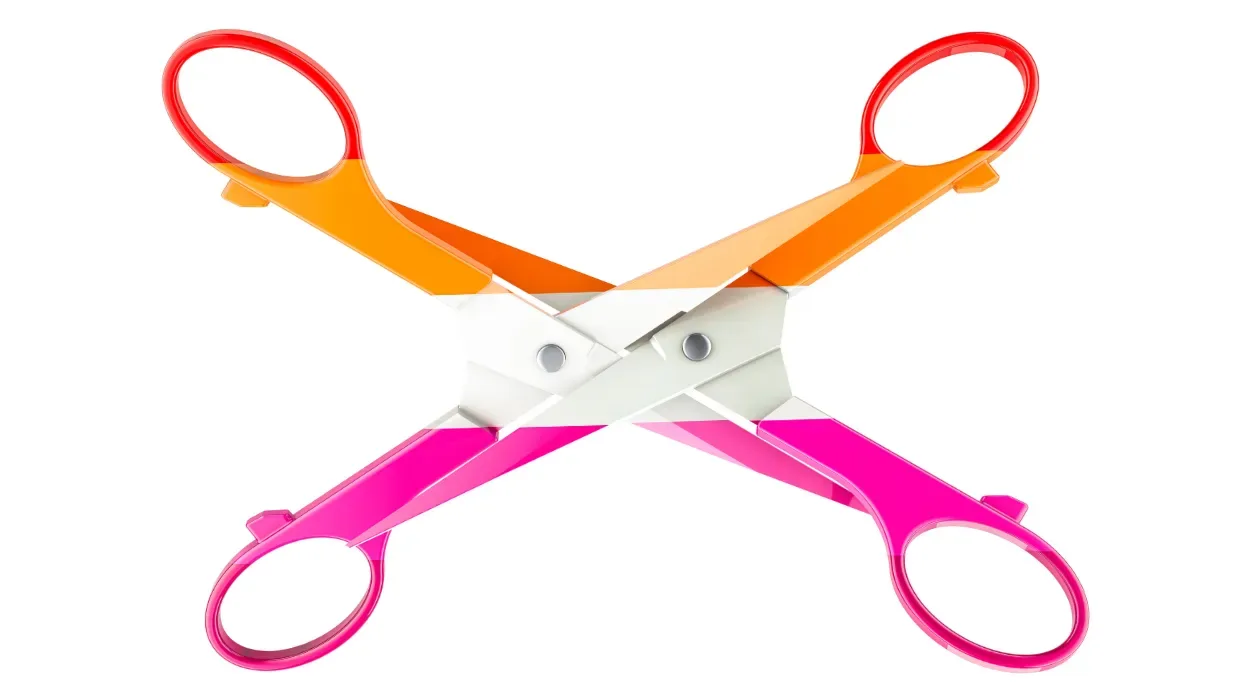
Scissoring, also known as tribadism or “tribbing,” is a sexual practice most commonly associated with sex between two people who have vulvas—often in the context of lesbian relationships. While it has gained widespread recognition largely due to its portrayal in pornography and pop culture, real-life experiences and opinions on scissoring vary significantly. This essay explores the history, mechanics, social perceptions, and realities of scissoring as a form of sexual expression, while challenging misconceptions and addressing its role in queer sexual intimacy.
Understanding What it is
Scissoring generally refers to a position in which two partners interlock their legs and press their vulvas together, creating genital-to-genital contact. The name comes from the visual resemblance to the blades of scissors intersecting. The primary goal of this position is mutual stimulation, particularly of the clitoris, labia, and other parts of the vulva. It can be done in several variations lying side-by-side, with one partner on top, or with legs wrapped in different ways to accommodate body shapes and preferences.
Pleasure and Practicality
While scissoring is often portrayed as a staple of lesbian sex, the actual pleasure derived from it can be subjective. Some individuals report that the position is physically pleasurable, emotionally intimate, and satisfying, especially because it involves full-body contact and eye contact. Others, however, find it awkward, difficult to align correctly, or lacking in sufficient clitoral stimulation to result in orgasm. Because every body is different, the effectiveness and enjoyment of scissoring depend on the individuals involved, their preferences, and their communication.
Media Representation and Misconceptions
Mainstream pornography has played a significant role in shaping public perceptions of scissoring. In many adult films, scissoring is depicted as a central or even primary sexual activity between women, often in exaggerated and unrealistic ways. These portrayals have led to widespread assumptions that all lesbians engage in or enjoy scissoring, which is not the case.
Moreover, this focus on scissoring in media can perpetuate a heteronormative gaze, catering to male viewers rather than reflecting the diverse sexual realities of queer women. Many lesbians and queer individuals criticize the overemphasis on scissoring in media as misrepresentative, arguing that it reduces queer sex to something performative rather than authentic.
Cultural and Social Context
In recent years, discussions about scissoring have become more open and nuanced, especially within LGBTQ+ communities. As sexual education becomes more inclusive, there is a greater effort to provide accurate, shame-free information about a wide range of sexual practices, including scissoring. These conversations allow people to explore what works for them without feeling pressured to conform to media-driven expectations.
Furthermore, scissoring can have symbolic value. For some couples, it represents closeness, mutual pleasure, and the rejection of penetrative, male-centered definitions of sex. Even if it’s not the most physically stimulating act for everyone, it may carry emotional or relational significance.
Scissoring is a valid and real sexual practice for some, and a myth or media creation for others. While it has been heavily stylized and popularized by pornography, its real-world use and enjoyment depend entirely on the preferences of the individuals involved. Like any sexual activity, it is neither inherently superior nor inferior to other forms of intimacy. What matters most is communication, consent, and mutual pleasure. As sexual culture continues to evolve, it’s important to challenge stereotypes and make space for honest, diverse experiences including those that involve, or don’t involve, scissoring.