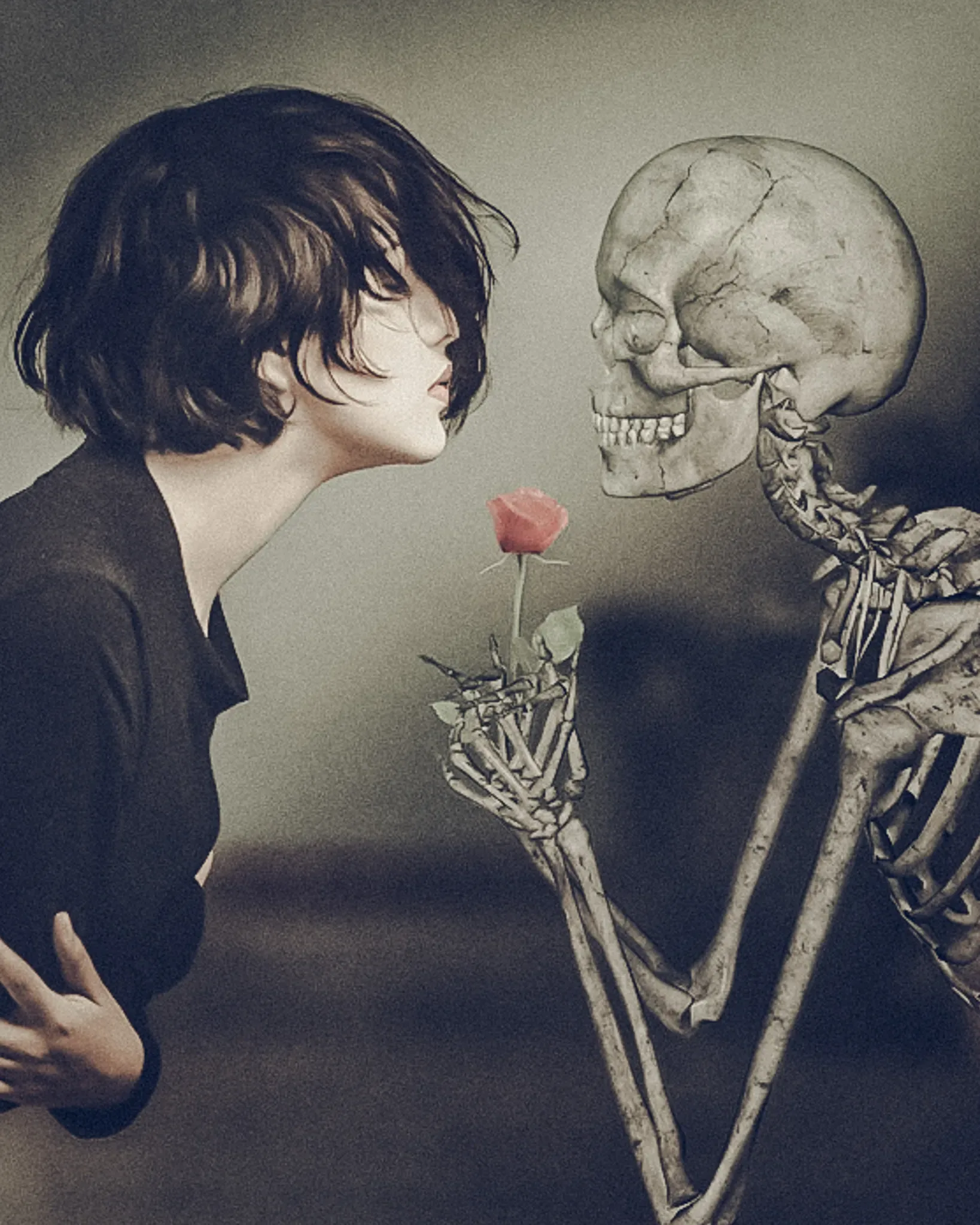
When autumn air grows sharp and the trees stand skeletal beneath a silver moon, Halloween descends not only as a night of fright, but as a season of strange desires. We decorate our homes with death, dress ourselves in the skin of nightmares, and flirt with fear as though it were an old lover. But beneath the surface of tricks and treats lies something darker, more intimate: a whisper of obsession with the otherworldly. Among Halloween’s many taboos, none is as eerie or oddly romantic as Spectrophilia the fascination with, and sometimes desire for, spirits of the dead.
Spectrophilia both a psychological phenomenon and a recurring theme in folklore describes a deep attraction, sometimes sexual or emotional, toward ghosts and supernatural beings. Though it often lurks in the shadows of parapsychology and taboo, its roots run deep in human culture. Throughout history, tales have been told of spectral lovers: women haunted by the touch of dead soldiers, men seduced in dreams by ghostly brides, and mourners who swear their lost loves still linger in the night, whispering across the veil.
Why does this fascination peak during the Halloween season? Perhaps because Halloween is the one time of year we embrace the unknown. The boundaries between the living and the dead blur. The veil is said to thin, allowing spirits to slip through cracks in reality and maybe, into our beds, our dreams, our hearts. It is a time when the eerie becomes acceptable, when longing takes on an otherworldly form.
Gothic literature and horror films often lean into this romantic terror. From Edgar Allan Poe’s lost Lenore to Guillermo del Toro’s Crimson Peak, the ghost is not only an object of fear it is a vessel for longing, loss, and forbidden love. The ghost represents the unreachable: a lover who cannot stay, a memory that cannot die. Spectrophilia, then, is not just about attraction to the dead—it is about the ache for what is gone, and the seductive danger of wanting it back.
Psychologically, some interpret spectrophilic experiences as lucid dreams, sleep paralysis, or grief-induced hallucinations. Yet for those who claim to have felt a ghost’s touch, the experience is real, intimate, and sometimes profound. In the deep hours of a Halloween night, with candles flickering and cold air moving where no door stands open, the idea of being visited touched, watched, loved by a ghost does not seem so far-fetched.
But like all haunted romances, spectrophilia carries danger. Ghosts, by nature, are beings of sorrow. They are unfinished stories, unresolved trauma, lingering pain. To invite them too deeply into one’s psyche or one’s heart is to invite madness, obsession, and decay. And yet… that is the gothic allure.
Halloween offers us a safe space to dance with the dead, to play with fear, and to explore the edges of desire. It is the season where love can bloom in graveyards, and longing may echo down candlelit halls. For some, Spectrophilia is a fantasy. For others, it is a secret they carry, bound in silence and shadow.
So this Halloween, as the wind sighs through the trees and strange dreams stir behind closed eyes, ask yourself: What would you do if something unseen reached out not to scare you, but to hold you? And more importantly… would you let it?