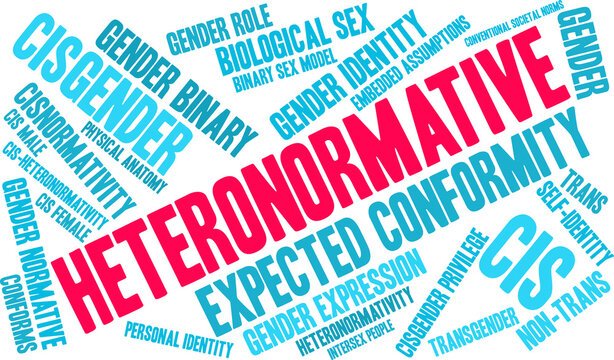
“Heteronormative” is one of those words that shows up in think-pieces, TikTok debates, and academic essays alike, but it’s often tossed around faster than anyone stops to explain it. At its core, heteronormativity is the assumption that being straight is the default the “normal,” expected way to love, date, build a family, or simply exist in the world.
It’s not just about who people think you’re attracted to. It’s about a whole invisible script that society quietly hands out. That script says: men act like this, women act like that, relationships follow a certain order, and anything outside of those lines must be explained, justified, or exceptional. Even if no one says it out loud, the expectation floats in the background, shaping everything from wedding cards to movie plots to the casual “Do you have a boyfriend?” asked to a woman without a second thought.
Heteronormativity is subtle. It hides in language, assumptions, traditions, and habits. It’s the idea that a couple must involve one man and one woman. It’s the belief that gender roles should be neatly paired. It’s the default setting that casts anything queer as a twist, a plot point, or an alternative lifestyle rather than a normal one.
The challenge with heteronormativity isn’t that heterosexuality exists of course it does, and there’s nothing wrong with it. The issue is when one type of relationship is treated as the standard and everything else as a deviation. That can make people feel invisible in small ways (“Which one of you is the bride?”) or pressured in bigger ways (feeling you must follow certain gender roles to be “valid”).
Understanding heteronormativity helps us see why representation matters why it’s meaningful when movies show diverse families, why inclusive language matters, and why questioning old assumptions isn’t about being “politically correct,” but simply acknowledging that humans come in more than one model.
When you zoom out, the big lesson is this:
There is no one universal blueprint for love, identity, or partnership. Some people thrive in heterosexual relationships. Some don’t. Some fit traditional roles. Some rewrite them entirely. And all of it is normal.
Heteronormativity tries to shrink the world into a familiar shape. But life and love have always been much bigger, stranger, more colorful, and more creative than any default setting could ever capture.