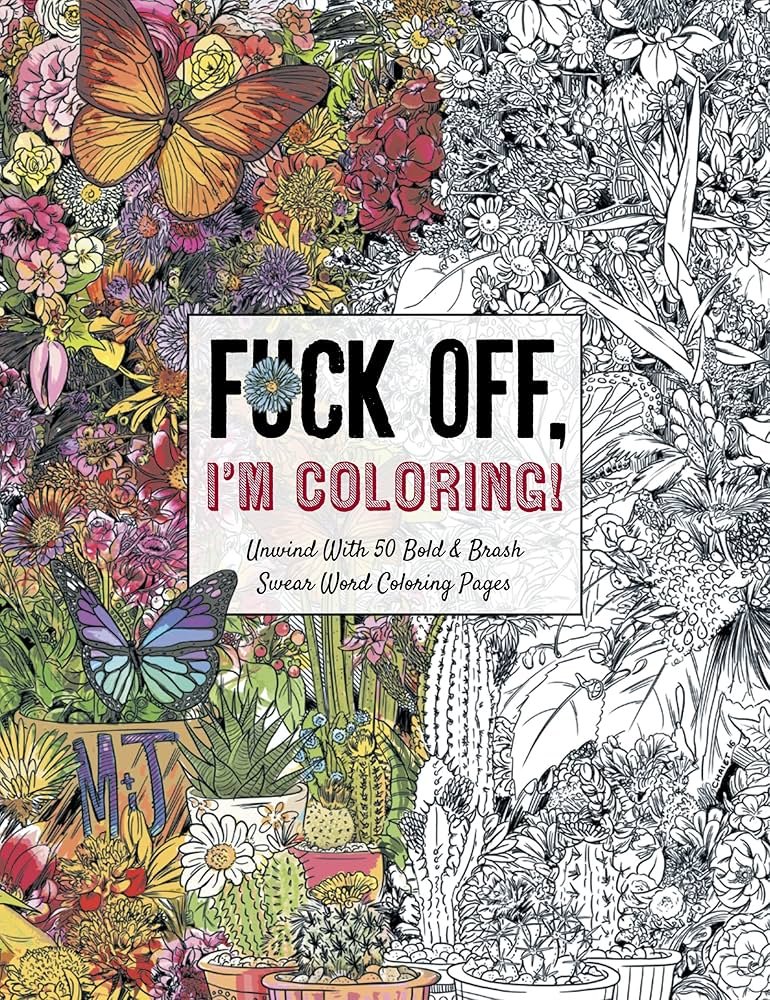
What once seemed to be a children’s pastime has in recent years become a booming phenomenon for adults: the use of specialised colouring books designed for grown-ups. These books featuring intricate patterns, mandalas, nature scenes, pop-culture motifs and more invite the adult colourer to relax into the tactile comfort of choosing hues, shading in shapes, and engaging in a gentle creative act. But beyond nostalgia and novelty, research and commentary suggest that adult colouring books serve a range of psychological, cognitive, and emotional functions.
Why adult colouring books work: mechanisms of benefit
Multiple mechanisms help explain why adult colouring books can have positive effects:
Mindfulness / present-moment focus
Colouring requires selecting colours, staying within lines (for many books), paying attention to shapes. This directs attention away from ruminative thoughts or future worries and into the “here and now”. For instance, research indicates colouring can reduce anxiety by shifting attention from self-awareness to the task.
Relaxation & stress reduction
The repetitive, rhythmic motion of colouring (filling spaces, choosing colours, repeating patterns) has been likened to meditation. One article says: “Adult colouring pages help your brain relax… you’re not disturbed by your own thoughts and appraisals.” Studies have found that even 10–20 minutes of colouring can reduce anxiety or stress markers.
Cognitive engagement & “flow”
Though seemingly simple, colouring can engage both creative (choosing colours, aesthetics) and analytic (pattern, boundaries) brain processes. This bilaterality can be beneficial for cognitive flexibility. The immersive state achieved can resemble “flow”, where time seems to disappear and one is fully engaged.
Fine motor / hand-eye coordination
Some adult colouring books contain small detailed designs which can help practice precision, hand-eye coordination and finger dexterity—useful especially for older adults or those recovering motor skills.
Creative outlet with low pressure
For many adults, the idea of making “art” from scratch may feel intimidating. Colouring offers a form of creativity without the demand of composition, sketching, major decision-making. You simply engage with a provided design and bring it to life. Many write that this “safe” space for expression (no critique, no performance) is freeing.
Screen-free downtime
In a digital era saturated with screens, notifications and media, the tactile, analogue activity of colouring can be a welcome contrast—slowing down and providing a break.
Practical aspects: how to use adult colouring books
-Choose a book whose style appeals to you: e.g., simpler large-shapes if you want low stress, or intricate mandalas if you’re aiming for deep focus. For example: Mandalas Adult Coloring Book with 50 mandala designs is one such choice.
-Use good materials: coloured pencils, gel pens, fine markers depending on your preference. Some books specify single-sided printing to avoid bleed-through if you use markers.
-Set aside dedicated time: even 10-20 minutes can be beneficial. Routine helps before bed, after work, during a break.
-Keep expectations low: the goal is not masterpiece output but process. Colouring is a tool for relaxation and presence.
-Use as part of a self-care toolkit: combining with soft music, tea, or good lighting enhances the experience.
-If you find you get anxious about “messing up” the lines or completing pages, remember: the benefit lies in the act of colouring, not perfection.
Some limitations & critiques
-While many users report benefits, colouring is not a panacea for serious mental health issues. It may help with stress, low-level anxiety, but it is not a substitute for professional therapy when needed.
-For some people, the intricate nature of adult designs can trigger anxiety, e.g., worrying about doing it “right” or finishing the page.
-The craze for adult colouring books may have peaked in mainstream popularity; some forums note fewer bookstore placements though online sales continue.
-The “adult” label sometimes perpetuates an oversimplified view: liking to colour is not inherently “just for children” vs “adults” the value lies in the practice rather than the marketing.
Adult colouring books offer a compelling blend of nostalgia, creativity, mindfulness and relaxation. Through the simple act of colouring, adults can engage in a low-stakes creative endeavour that draws attention away from stress, promotes presence, and exercises both mind and body. While not a cure-all, they can be a valuable self-care tool.
For those seeking a gentle way to unwind, tap into their creative side, or carve out a screen-free moment of calm, placing one of these books on the shelf (alongside decent colouring tools) may be a surprisingly worthwhile investment.